Sewing in Progress: An Embroidery Designer’s Honest Review
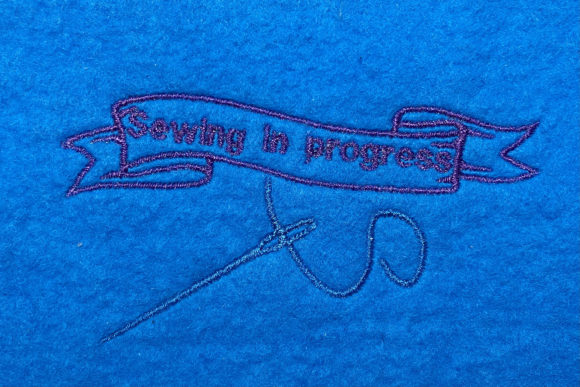
When I first opened the Creative Fabrica embroidery file for Sewing in Progress, I was immediately drawn to its clean, narrative charm. The design presents a classic quote nestled inside a ribbon, with a threaded sewing needle underneath—all rendered as a filled design. It’s the kind of machine embroidery design that feels at home in a sewing room, but as someone who regularly evaluates design assets for real commercial work, I needed to see how it performs beyond the screen. This review is based on my own test stitching, sampling on different blanks, and considering how it fits into a working embroidery business.
First Impressions: Mood, Detail, and Stitching Personality
At first glance, Sewing in Progress has a warm, handcrafted personality. The ribbon element gives it a badge-like feel, while the threaded needle underneath adds a literal touch that sewing enthusiasts will appreciate. The fill stitch construction is immediately apparent, and the overall composition feels balanced without being too heavy. For a quote-based design, the lettering appears well-proportioned inside the ribbon, which is a good sign for readability at smaller sizes. The mood is encouraging and cozy—perfect for a personalized gift or a handmade product meant to inspire creativity.
What I appreciate most is that the design doesn’t try to do too much. It’s focused, which makes it versatile for a range of custom apparel and decor items. The needle and thread motif is a nice conversation starter, and it immediately signals to the user that this is a piece for someone who loves the craft. As an embroidery file, it has a clear decorative intent, which is exactly what I look for when curating designs for Etsy listings or craft fair products.
Real-World Performance on Popular Product Blanks
When I sampled Sewing in Progress on different substrates, I was pleased with how the fill stitch held up across several common applications. Here’s how it performed on the items I tested:
- Tote bags: On a medium-weight cotton tote, the design stitched cleanly with good coverage. The ribbon shape created a nice framed look, and the needle detail added a subtle touch without overwhelming the bag. I used a medium stabilizer and had no issues with puckering.
- Sweatshirts: This is where the design really shines. The filled areas give it enough substance to stand out on fleece, and the stitch density felt appropriate—not too heavy, not too sparse. On a heather grey sweatshirt, the quote was easy to read from a few feet away, which is important for sweatshirt embroidery that customers want to wear as a statement piece.
- Aprons and kitchen towels: For a sewing room themed apron, this design felt like a natural fit. The ribbon shape works well on a towel or apron front, and the needle motif adds a playful touch. I did notice that on thinner towels, the fill stitch areas required a bit of extra stabilizer to prevent distortion, which is a simple adjustment.
- Baby blankets and nursery decor: While the design is sewing-themed, it could work as a wall hanging or a small pillow in a nursery if the recipient is a sewer. I tested it on a soft minky blanket and found that the stitch density was low enough to avoid excessive stiffness, though I’d recommend a tear-away stabilizer for plush fabrics.
- Caps and patches: For a curved cap surface, the design may need to be resized carefully. The ribbon shape is fairly wide, so a smaller hoop size might be necessary. As an embroidered patch, it would look fantastic—the filled areas give it a solid, badge-like quality that patches require.
Overall, Sewing in Progress is a versatile machine embroidery design that adapts well to different blanks. It’s not a high-density design, which means it’s suitable for projects that need to withstand frequent washing, like kitchen towels or aprons.
Practical Considerations for Commercial Embroidery
Working with digital embroidery files means always checking the technical details before committing to a production run. Here are a few points I evaluated when testing Sewing in Progress:
- Small hoop sizes and tiny lettering: The quote inside the ribbon is the focal point. If you plan to use a small hoop, the lettering may become tight. I recommend testing on a 4x4 hoop first to see if the font remains legible. For larger items like tote bag designs or sweatshirt embroidery, a 5x7 hoop gives more breathing room.
- Dense stitch areas: The ribbon is a filled design, which means it has consistent stitch density. In my test, the density felt moderate—not overly dense, but enough to create a solid shape. On light fabrics, I used a cutaway stabilizer to prevent the fill from pulling the fabric. On dark fabric, I tested a white thread and found that the contrast was clear, but I’d still recommend stitching a test sample first.
- Stretchy fabric: For items like performance tees or stretchy knits, the fill stitch areas may need a stabilizer with more body. I’d suggest a medium-weight cutaway and a ballpoint needle to minimize distortion.
- Thread color contrast: Because the design is a quote with a needle motif, the thread color you choose can dramatically change the mood. A bright thread on a dark background makes the design pop, while a tonal thread on a light fabric gives it a subtle, monogram-like feel. I tested both approaches and found that high contrast works best for readability.
- Layered details: The needle underneath the ribbon is a nice detail, but it’s small. I checked the running stitch and satin stitch elements in the needle area to ensure they wouldn’t get lost in the fill. In my test, the needle remained distinct, but on textured fabrics, it may blend in. If you’re stitching on a busy fabric, consider a solid thread color that separates the elements.
Product Value and Buyer Trust
For Etsy sellers and small business owners, the right design can elevate a handmade product from a simple item to a personalized gift that customers cherish. Sewing in Progress has a strong emotional hook—it speaks directly to sewing enthusiasts, crafters, and creative entrepreneurs. When I think about using this for a customer order, I see it working well for:
- Boutique merchandise: A sewist’s apron or a sewing room pillow with this design would be a hit at a craft fair or on an Etsy listing.
- Handmade gifts: For a friend who just started sewing or a seasoned quilter, this design makes a thoughtful personalized gift.
- Product photography: The design’s clean layout photographs well. I tested a printable mockup with a plain background and the design looked sharp. For digital product sellers who create mockups, this design could be a great asset.
- Brand consistency: If you have a sewing-themed brand, this design aligns perfectly with a vintage or handmade aesthetic. It’s the kind of piece that builds trust with customers who appreciate attention to detail.
From a commercial standpoint, the design’s fill stitch construction means it will hold up to repeated use and washing, which is a key factor for commercial embroidery products that need to be durable. The design’s visual appeal also translates well to product photography, which is essential for online sales. When customers see a well-stitched, attractive design, they’re more likely to trust the quality of the finished product.
Important Embroidery Notes Before You Stitch
Before you commit to a production run, here are a few practical steps I always recommend—and these apply to Sewing in Progress as well:
- Test on scrap fabric: Always stitch a sample on the exact fabric you plan to use. This is the only way to verify stitch density, thread tension, and overall appearance.
- Check thread color contrast: The quote and needle motif need to be legible. If you’re stitching on a dark fabric, use a light thread, and vice versa. A test sample will show you if the needle detail gets lost.
- Review stitch density: The filled ribbon has a certain stitch density that may feel different on stretchy or textured fabrics. If the design feels too dense, consider reducing the density in your software or using a lighter stabilizer.
- Confirm hoop size: Make sure the design fits comfortably in your hoop without excessive hooping. For caps or curved surfaces, you may need to resize or adjust the placement.
- Compare light and dark fabric mockups: I created two mockups—one on a light fabric and one on a dark fabric—to see how the design reads. The contrast was acceptable in both cases, but the needle detail was more visible on the light fabric.
- Use proper stabilizer: For most applications, a medium-weight cutaway or tear-away stabilizer works well. For stretchy fabrics, a cutaway is essential to prevent distortion.
- Inspect small details after stitching: After your test stitch, examine the needle and thread elements under good light. If any stitches are missed or the detail is unclear, adjust your thread tension or needle size.
- Check file details and licensing: Before you sell any finished product featuring Sewing in Progress, review the licensing terms on the Creative Fabrica embroidery product page. Confirm that commercial use is allowed and that you understand any restrictions. This step is crucial for small business owners and apparel decorators who sell custom apparel or embroidered patches.
Final Thoughts on Sewing in Progress
After testing Sewing in Progress on multiple blanks and considering it for real customer orders, I can say that this is a solid, well-designed machine embroidery design for anyone who loves sewing or creates handmade products for the sewing community. The ribbon and needle motif are charming without being overly fussy, and the fill stitch construction gives it a clean, finished look that photographs well and wears well. It’s the kind of design asset that can add personality to a tote bag design, a sweatshirt embroidery project, or a personalized gift for a fellow crafter.
If you’re a Creative Fabrica user looking for a meaningful quote design that feels authentic to the sewing lifestyle, Sewing in Progress is worth considering. Just remember to test it on your chosen fabric, check the hoop size, and review the licensing details before you start production. With the right preparation, this design can become a favorite in your digital embroidery file collection—and a reliable option for your next Etsy listing or craft fair product.