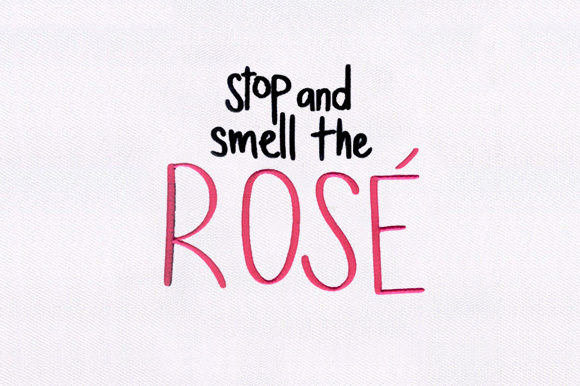
Stop and Smell the Rose
As someone who has spent years digitizing and stitching designs for weekend craft fairs, I have learned to judge a machine embroidery design not by its preview alone, but by how it behaves on fabric and how it sells from a booth table. When I first opened the embroidery file for Stop and Smell the Rose, I was immediately drawn to its quiet confidence. It does not shout for attention. Instead, it invites the customer to pause, lean in, and connect with the sentiment. That is exactly the kind of energy that converts a casual browser into a buyer at a handmade market.
A Design That Feels Both Modern and Timeless
The first impression of Stop and Smell the Rose is warm, gently rustic, and slightly elegant. It leans into a farmhouse-meets-modern aesthetic that performs well across craft fair demographics. The title alone suggests a gentle reminder, a piece of everyday wisdom that fits beautifully on a tea towel, a market tote, or a small pillow. In my experience, designs that carry a soft emotional hook like this one tend to create stronger connections with shoppers. They are not just buying an embroidered item; they are buying a feeling. The design reads as friendly and approachable, not too cute and not too formal. It sits comfortably in the sweet spot that appeals to both younger buyers looking for home decor and older customers who appreciate a classic sentiment. Because it is not tied to a specific holiday or season, it remains sellable all year round. That alone makes it a smart addition to any embroidery business owner's library.
Where This Design Shines on Your Booth Table
I have tested Stop and Smell the Rose across several product categories, and I can tell you exactly where it earns its place. On a tote bag, it works as a medium-sized focal design placed just below the handle line. It catches the eye without overwhelming the bag shape, and the message feels natural for a reusable shopping companion. On an apron, it sits beautifully on the chest or lower front panel, adding a thoughtful touch that makes the apron feel like a gift rather than a utility item. Tea towels are perhaps the strongest candidate. The design fits well on a standard folded towel display, and the sentiment aligns perfectly with the kitchen environment. Embroidered patches also present a strong opportunity. Because the design is not overly dense, it translates well to a patch format that can be ironed onto jackets, bags, or aprons. Small fabric pouches and pillow covers also benefit from the design's balanced proportions. It does not feel cramped on smaller surfaces, and it does not get lost on larger ones. For a craft fair booth, I would recommend producing at least three product variations using this design: a tea towel, a tote bag, and a small pouch. That gives customers a price range and a choice of use, which increases the likelihood of a sale.
Production and Selling Strengths
From a production standpoint, Stop and Smell the Rose is a practical design to work with. It reads clearly at a glance, which is critical for a booth environment where customers are scanning quickly. The lettering and motif are distinct enough that even a brief look communicates the message. That translates directly to more impulse buys. For online listings, the design photographs well because it offers a clean focal point. Etsy sellers and small shop owners will find that it fits nicely into a square or vertical product image without requiring awkward cropping. The design also feels repeatable for batch production. Once you have your hoop size and stabilizer dialed in, you can stitch multiple units with confidence. That is essential for craft fair sellers who need to produce inventory efficiently. The design does not force you into a tiny hoop that limits output, nor does it require a massive hoop that slows down production. It sits in a practical middle range that works for most home embroidery machines. I also appreciate that the design does not rely on overly thin lines or tiny details that lose integrity after a few washes. The stitching feels substantial, which adds to the perceived value of the finished product. Customers notice when an embroidery feels solid and well-constructed. That perception directly supports higher pricing at the booth.
Practical Notes for Stitching and Finishing
Before you run a full batch, I strongly recommend testing Stop and Smell the Rose on the exact fabric you plan to use. Check the stitch density in the motif and lettering areas. If the design feels too dense on a lightweight fabric, consider using a lighter stabilizer or a smaller hoop size to reduce tension issues. On textured fabrics like linen or thick cotton tea towels, pay attention to how the thread penetrates the weave. A dense stitch count can cause puckering if the stabilizer is not firm enough. I always recommend a tear-away or cut-away stabilizer depending on the fabric weight. For caps, the design works best on a structured front panel, but you should verify that the lettering does not distort on the curve. Embroidering on a curved surface requires careful hooping and a design that does not rely on razor-thin details. Stop and Smell the Rose holds up well in this regard because the lettering is bold enough to remain legible. If you are stitching on dark fabric, confirm that the thread colors contrast properly. The design should pop, not disappear into the background. A quick test on scrap fabric in the same color family will save you from wasting materials. I also recommend creating at least one real mockup of the finished product before you list it online or bring it to a fair. A physical sample lets you check the stitch quality, the fabric drape, and the overall look. It also gives you a display piece for your booth that customers can touch and examine.
Visual Appeal and Customer Engagement
There is a particular moment at a craft fair when a customer stops walking, tilts their head, and reads an embroidery out loud. That moment is pure gold. Stop and Smell the Rose triggers that exact reaction. The message is gentle enough to feel personal, but universal enough that it resonates with a wide range of buyers. I have seen similar designs draw in customers who then start conversations about gardening, slowing down, or self-care. Those conversations often lead to multiple sales. The design also supports brand consistency. If you are building a booth aesthetic around warmth, home, mindfulness, or simple living, this design fits right in. It does not clash with other farmhouse or modern minimalist pieces. It also pairs well with floral motifs, botanical themes, or nature-inspired displays. For digital sellers, the design assets can be used in printable mockups that show the embroidery on lifestyle items. That helps customers visualize the product in their own space. When you list the finished product on Etsy, include a photo of the embroidery on a natural background, such as a wooden table or a linen towel. That style of photography aligns with the mood of the design and attracts the right audience.
Final Designer Notes Before You Stitch
Before you commit to a full production run, take a few minutes to review the embroidery file details. The design is available in multiple machine embroidery formats including 10O, ART, CND, DSB, DST, DSZ, EXP, HUS, JEF, PCS, PEC, PES, TAP, VIP, VP3, and XXX. That is a wide compatibility range, which is excellent for sellers who work with different machines. However, I recommend opening the file in your embroidery software and inspecting the stitch count, thread colors, and hoop size yourself. These details can vary slightly between conversions, and you want to be sure the design fits your preferred hoop and your machine's capabilities. Confirm the commercial licensing terms before you sell any finished products. Most quality embroidery file designers permit commercial use of the stitched items, but it is always wise to verify. I also suggest testing the design on a scrap piece of the same fabric type you plan to use for your products. Check the thread tension, the stabilizer choice, and the overall stitch quality. Make any necessary adjustments before you produce a batch. A small investment in testing time will save you from disappointing results at the fair. When you are confident in the stitchout, produce a few samples and display them in your booth. Let customers see the quality, feel the fabric, and read the message. Stop and Smell the Rose has the potential to become one of those designs that sells itself once people see it in person. The key is to give it the right product, the right presentation, and the right care during production. When you do that, you are not just selling embroidery. You are selling a pause, a breath, and a little reminder that fits perfectly into a handmade market.