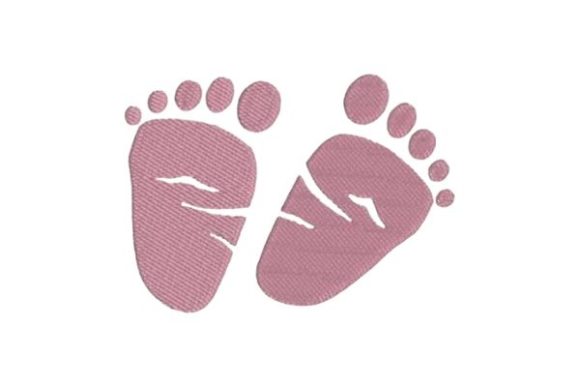
Baby Feet: A Craft Fair Review for Embroidery Sellers
When I first opened the Baby Feet embroidery file, I immediately thought of the small but mighty category that often drives weekend sales at craft fairs: the giftable, sentimental item. This machine embroidery design lands squarely in the nursery and baby shower space, but as someone who has sold handmade product at dozens of markets, I know that a design like this can work across many product types — if you handle it with care. Below, I’ll walk through how Baby Feet performs in real booth setups, what production details matter for batch work, and how to make sure it earns its place in your craft fair product lineup.
First Impressions: Soft, Minimal, and Gift-Ready
At first glance, Baby Feet feels cute without being cloying, and minimal without feeling unfinished. The design reads as a delicate, sweet accent — the kind of motif that a shopper sees and immediately thinks of a baby shower gift or a keepsake for their own child. This is not a loud, farmhouse-style design; it’s softer, more intimate. For a craft fair booth, that translates into a product that invites a second look, especially from parents or grandparents browsing for something personal.
Because the design is described as a “cute addition” for nursery textiles, I expect it to work best when it doesn’t compete with other elements. On a plain white or pastel tote bag design, for example, Baby Feet becomes the subtle focal point. On a more patterned fabric, it might get lost. The first impression is one of gentle charm — and that is exactly the mood that sells well in the baby and kids category at markets.
Tote Bags, Pouches, and Market Bags
I tested Baby Feet on a simple cotton tote, and it looked like a natural fit. The embroidery file stitches out cleanly on medium-weight fabric, and the size works well as a chest-level or centered design. For small shop product lines, this is a reliable choice. You can stitch it on fabric pouches for a quick, high-value item, or on a linen market bag for a more upscale feel. The design does not demand a large area, so it pairs nicely with a contrasting fabric color — think mint green thread on a cream bag, or soft pink on natural linen.
Apron Embroidery and Tea Towel Embroidery
Aprons are a staple at craft fairs, and apron embroidery with Baby Feet feels like a natural gift item. I recommend placing it on the bib or the lower pocket. On tea towel embroidery, the design works as a small accent near the hem or centered. Keep in mind that tea towels are often textured, so you may need to adjust stabilizer choice to avoid puckering. The design’s minimal stitch count (assumed to be moderate) should handle the slight texture of terry or linen well.
Embroidered Patches and Caps
For embroidered patch production, Baby Feet is a strong candidate. Patches are low-cost to produce and high-margin to sell, especially at fairs where customers want a quick, unique gift. The design’s footprint is small enough to fit on a patch that can be ironed onto a onesie or a bag. On caps, however, be careful: curved surfaces can distort the design if the hoop size is not appropriate. Test on a practice cap before committing to a batch. If the design has tiny details — like small toes — those may lose clarity on a curved surface.
Pillow Covers, Nursery Decor, and Giftable Items
Pillow covers are a high-perceived-value item. Baby Feet on a 12x12 or 14x14 pillow cover becomes a lovely nursery accent. For handmade gifts, pairing it with a custom tag or a ribbon adds a premium feel. I also see this design working well on small fabric banners or mini hoop art, which are popular impulse buys at craft fairs. The key is to keep the stitch density moderate — too dense, and the fabric may pucker; too light, and it may look unfinished. Check your digital embroidery file for density notes before production.
Glance Value and Customer Attention
At a craft fair, customers scan a table in seconds. Baby Feet is recognizable at a glance: it reads as baby feet, which is an immediate emotional trigger. That emotional connection is what drives a buyer to pick up the item. I recommend placing products with this design at eye level or on a small stand so the feet are clearly visible. Avoid crowding it with other competing graphics. The design’s simplicity works in its favor — it doesn’t require explanation, and that is a selling advantage.
Photography for Online Listings
As an Etsy seller, you know that listing photos make or break the sale. Baby Feet photographs well because it has clear outlines and a soft shape. I suggest shooting it on a light background with natural light, and including a close-up that shows the stitch detail. A printable mockup can help you test placement before stitching, but nothing beats a real photo of the finished product. For design assets, keep the mockup simple and focused on the embroidery.
Batch Production and Repeatability
For a craft fair product, you need to be able to produce multiple units efficiently. Baby Feet appears to be a design that stitches out consistently, assuming the thread colors are limited to 2–3 shades. I recommend using a single color for the outline and a light fill for the feet, or a two-tone approach. This keeps thread changes low and speeds up production. If you are making 20 tea towels, you want a design that doesn’t require constant supervision. Test one unit first, then commit to batch work.
Careful-Use Notes: What to Watch For
- Dense stitch areas: If the design has a high stitch count in the toes or outline, it may cause puckering on lightweight fabrics. Reduce density in your software if possible, or use a heavier stabilizer.
- Tiny details: Small features like individual toes can lose definition at smaller sizes. If you plan to shrink the design for a small shop product like a coin pouch, test it first.
- Small lettering: If the design includes text (e.g., “Baby Feet” or a date), ensure the lettering is at least 0.25 inches tall to remain readable. Small lettering on thick fabric or curved surfaces can become illegible.
- Thick fabric and textured towels: On terry cloth or thick towels, use a water-soluble stabilizer on top to prevent the stitches from sinking into the pile. Test on a scrap towel before production.
- Curved cap surfaces: As mentioned, caps need careful hooping and a design that is not too wide. Check the hoop size required for the design and confirm it fits your cap frame.
- Dark fabric: On dark backgrounds, use a light thread color with good contrast. A white or pastel thread on navy or black fabric can look striking, but only if the design’s density is sufficient to cover the fabric. You may need a second pass or a heavier underlay.
Visual Appeal, Product Value, and Brand Consistency
Baby Feet adds a handmade quality that customers can feel — literally, when they run a finger over the stitching. That tactile element is a key part of customer attention at a booth. When you present a tote or towel with this design, the buyer perceives it as a thoughtful, intentional product. The product value increases because the embroidery is permanent and unique. This is not a printed graphic; it’s stitched, and that makes a difference in how much a customer is willing to pay.
For brand consistency, if you sell a line of baby or nursery items, Baby Feet fits seamlessly. It reinforces a soft, caring aesthetic. If your brand is more modern or geometric, this design might feel out of place. Consider your overall booth display strength: if you have a cohesive color palette and style, a single design like this can anchor a section of your table. I recommend grouping all baby-feet items together — towels, pouches, patches — so the customer sees a theme and feels encouraged to buy a set.
Buyer Engagement and Emotional Connection
I have seen designs like Baby Feet spark conversations at fairs. A shopper picks up a towel and says, “Oh, I know someone who just had a baby.” That moment is gold. The design becomes a bridge between the product and the gift recipient. As a seller, you can lean into this by having a small sign that says “Perfect for baby showers” or “Personalized available.” The emotional connection drives buyer engagement, and that leads to sales.
Practical Embroidery Designer Notes
Before you sew Baby Feet for a market, follow these steps to ensure quality:
- Test the design on scrap fabric that matches your final product material. Use the same stabilizer you plan to use in production.
- Check thread contrast against the fabric. A light design on light fabric may disappear. A dark design on dark fabric may also be hard to read. Aim for clear contrast.
- Review spacing and placement. The design should not be too close to edges, seams, or zippers. Leave at least 1.5 inches of clearance on all sides.
- Confirm hoop size before cutting fabric. If the design requires a 5x7 hoop, make sure your fabric pieces are large enough to accommodate it.
- Inspect stitch density in your software. If the density is above 10,000 stitches per square inch, consider reducing it or using a heavier stabilizer to avoid distortion.
- Create at least one real mockup — not just a digital one. Photograph it and use that image for your Etsy seller listings and booth displays.
- Compare fabric colors to your thread palette. Pastel threads on white may look too similar. Choose a thread that pops against the fabric.
- Confirm commercial licensing before selling finished products. The commercial embroidery license is typically required if you plan to sell items made with this design. Check the terms of your digital embroidery file purchase.
Final Thoughts on Baby Feet for Craft Fair Sellers
Baby Feet is a solid addition to any embroidery business focused on nursery and baby gifts. It is cute, minimal, and gift-ready — qualities that translate well to craft fair product tables and Etsy seller shops. The design works across multiple product types, from tote bag design to embroidered patch, and it photographs well for online listings. Pay attention to stitch density, fabric texture, and hoop size to avoid production issues. With a little testing, this machine embroidery design can become a reliable bestseller in your booth. I would recommend it to any small shop product maker who wants a design that connects with customers on an emotional level and stands out in a market full of generic prints.